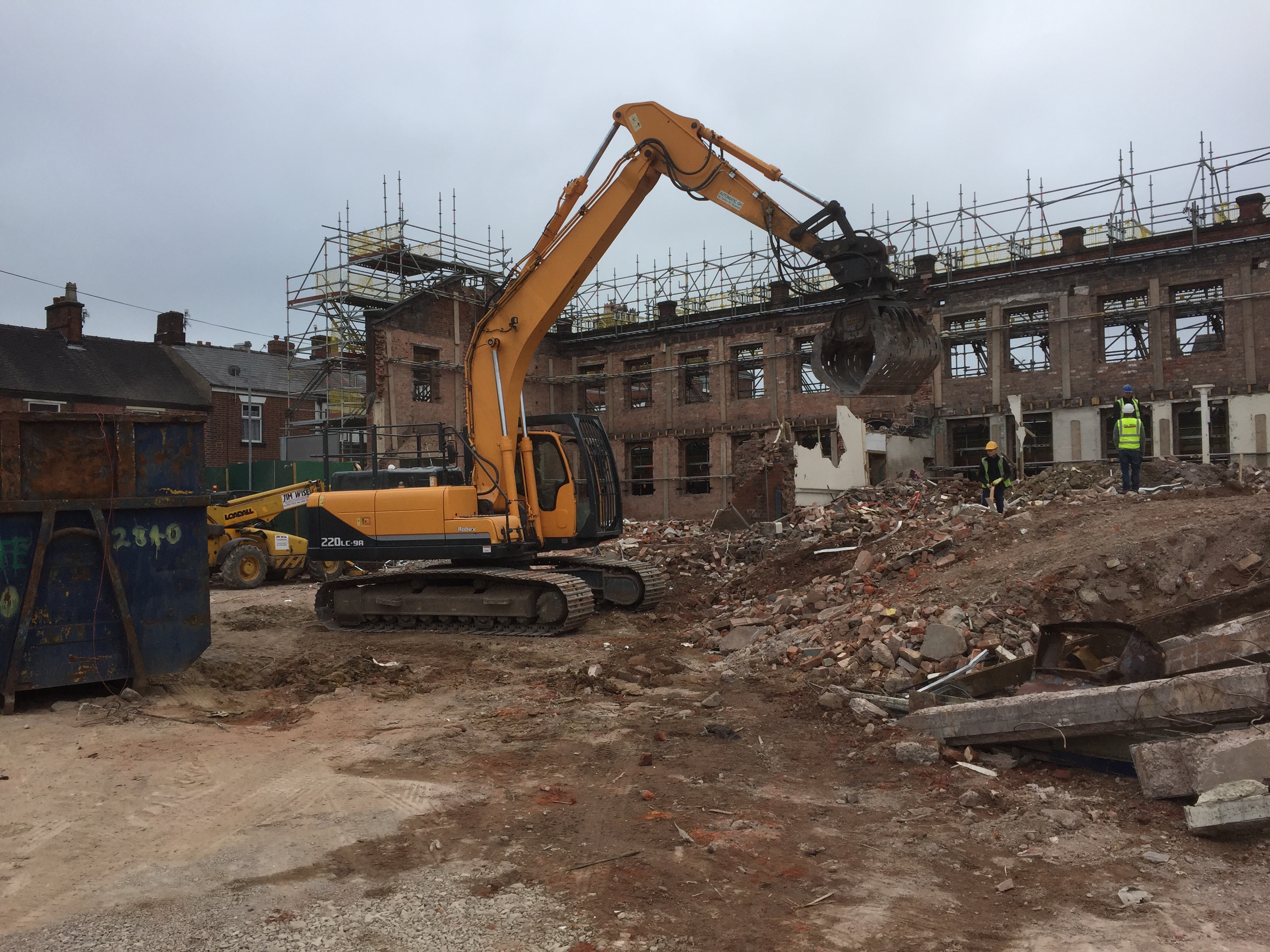
Industrial site clearance — the removal of former factories, distribution centres, process facilities, and their associated infrastructure — is among the most complex work in the construction sector. The combination of structural complexity, hazardous materials, contaminated ground, and large volumes of mixed arisings demands a contractor with specialist capability and robust environmental compliance.
What Makes Industrial Clearance Different?
- Ground contamination — oils, solvents, heavy metals, and industrial chemicals that require specialist soil investigation and disposal
- Embedded infrastructure — underground tanks, sumps, pits, drainage systems, and services that must be decommissioned before clearance begins
- Large concrete and steel volumes — requiring on-site processing to avoid unmanageable disposal costs
- Multiple ACM types — industrial buildings often contain significantly more asbestos than commercial premises, in a wider variety of locations
- Planning and environmental conditions — brownfield sites often carry environmental conditions that must be discharged before development can proceed
Ground Investigation: Know Before You Dig
Before committing to an industrial clearance programme, clients should commission a Phase 1 desk study (identifying historical site uses and likely contaminants) and a Phase 2 intrusive ground investigation (soil and groundwater sampling to characterise contamination). This data is essential for producing a waste management plan and for discharging any planning contamination conditions.
| Get a Free Quote → | 0800 222 9772 |
On-Site Processing: Crushing and Sorting
Industrial demolition generates large volumes of concrete and masonry. On-site concrete crushing is almost always economically justified on industrial clearance projects — the cost of mobilising a crusher is quickly offset against haulage and disposal savings. Steel from reinforced concrete and structural frames is segregated and sold to scrap merchants, further offsetting project costs.
Planning the Clearance Programme
A typical industrial clearance sequence: utility disconnections → asbestos removal (HSE-licensed where required) → structural demolition → concrete processing → contaminated material segregation and disposal → final clearance and levelling → validation survey. Jim Wise Demolition manages the full clearance programme for industrial clients, acting as principal contractor under CDM 2015 and coordinating all sub-consultants and regulatory notifications. Contact us on 0800 222 9772 to discuss your project.
.svg)