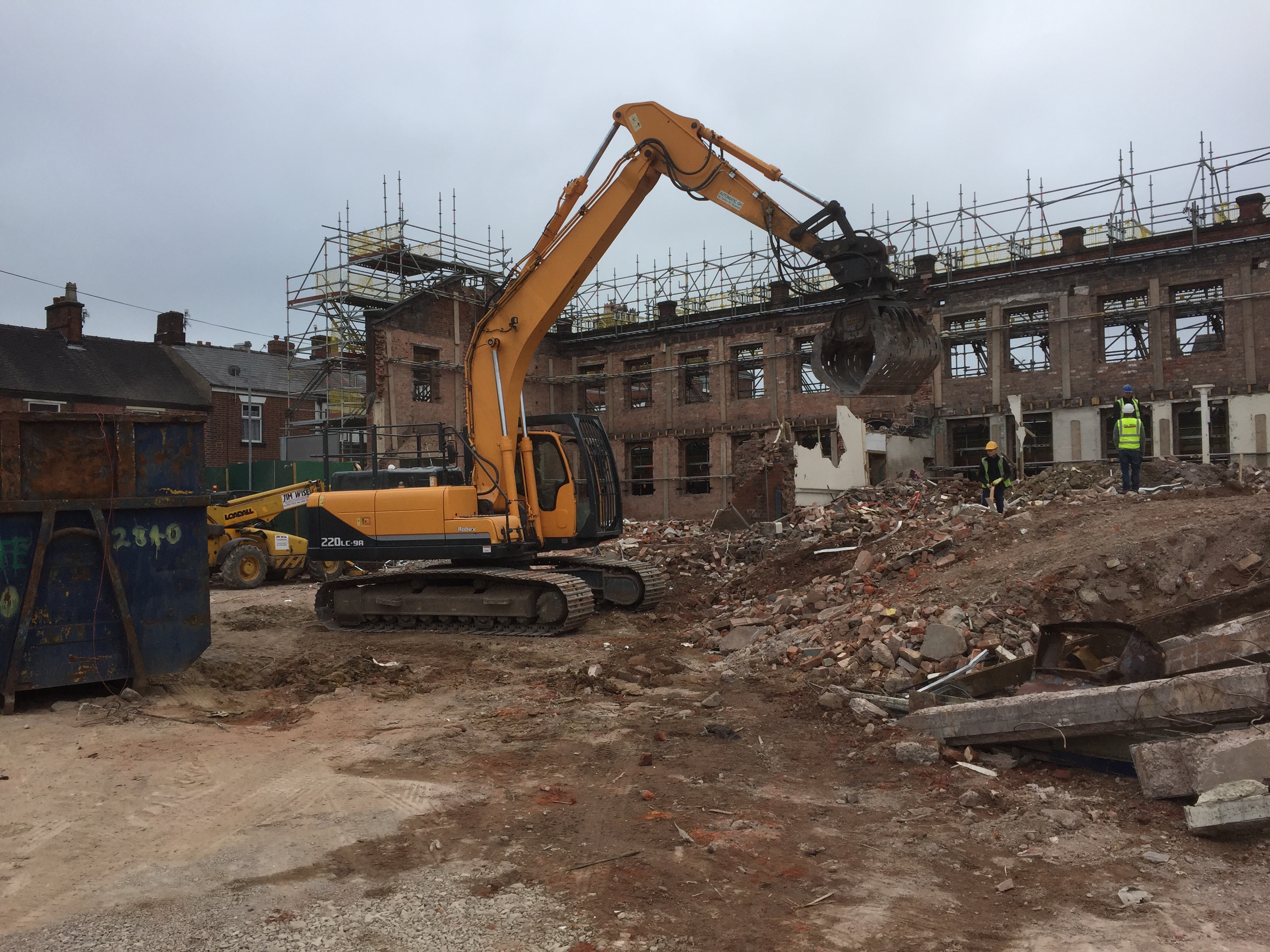
Site clearance is the process of removing all unwanted materials, structures, vegetation, and waste from a plot of land to make it ready for its next use. Whether you're preparing a brownfield site for development, clearing land after demolition, or dealing with an emergency situation, the scope and complexity of clearance works varies considerably.
What Does Site Clearance Include?
A professional site clearance service typically covers:
- Removal of above-ground structures (sheds, outbuildings, walls, fencing)
- Breaking out and removing surface concrete, hardstandings, and foundations
- Vegetation clearance — trees, scrub, invasive species such as Japanese knotweed
- Underground obstructions — old tanks, inspection chambers, buried services
- Soil and contaminated material removal and disposal to a licensed facility
- Grading and levelling to finished formation level
Types of Site Clearance
Brownfield clearance involves the remediation of previously developed land, often including contaminated ground, buried structures, and hazardous materials. This type of clearance typically requires ground investigation reports and a waste management plan before works begin.
Post-demolition clearance follows structural demolition — removing arisings, crushing concrete on-site where viable, and preparing the formation for development. Our concrete crushing service converts demolition rubble into reusable sub-base material, cutting haulage costs significantly.
Emergency clearance is carried out on short notice following structural failure, fire damage, or dangerous conditions. Jim Wise Demolition provides an emergency response service — contact us on 0800 222 9772.
| Get a Free Quote → | 0800 222 9772 |
How Long Does Site Clearance Take?
A straightforward residential site clearance might be completed in one to three days. A complex brownfield clearance on a multi-acre industrial site could run for weeks or months. Key factors affecting duration include the volume and type of material to be removed, access constraints, contamination management requirements, and whether crushing and processing is being done on-site.
What Drives the Cost?
- Volume of material — more waste means more skips, more haulage, and higher disposal costs
- Material type — contaminated soil, ACMs, and hazardous waste incur higher disposal costs than inert material
- Access — restricted or urban sites limit plant size and extend programme
- Ground conditions — buried structures, tanks, and hardstandings require specialist plant
- On-site processing — concrete crushing can offset disposal costs on large projects
Planning Your Site Clearance
Before appointing a contractor, you should have: a clear understanding of what needs to be removed, any ground investigation or desk study reports, confirmation of utility positions (gas, electric, water, telecoms), and any planning or environmental conditions attached to the land. Jim Wise Demolition can advise on all of these during a free site visit. We cover all of England and Wales — including Wolverhampton, Coventry, Warwickshire, Nottinghamshire, and Sheffield.
.svg)