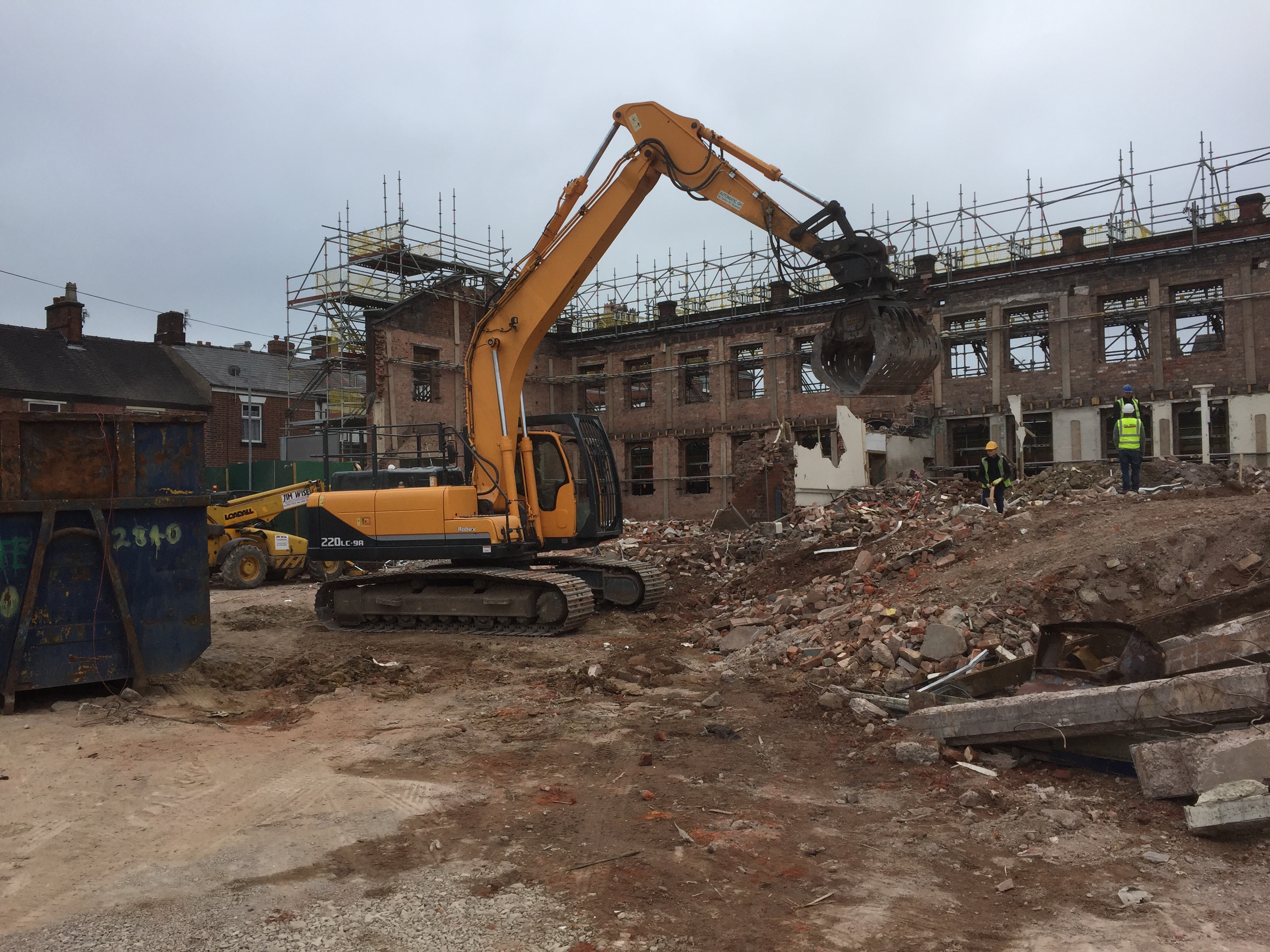
Demolition generates significant volumes of waste — and every business that produces, handles, or disposes of demolition arisings has legal obligations under the Environmental Protection Act 1990 and the Duty of Care Regulations. Getting waste management right is not just an environmental responsibility: it protects clients from regulatory liability and can substantially reduce project costs.
The Waste Duty of Care
Under the Duty of Care, you have a legal obligation to ensure that all waste produced on your site is handled correctly from the point of production to its final disposal or recovery. The key requirements are: waste must be correctly described on transfer documentation; it must only be passed to an authorised waste carrier; and you must take all reasonable steps to prevent its escape into the environment. Transfer notes must be kept for a minimum of two years.
Site Waste Management Plans
Although the 2008 regulations requiring Site Waste Management Plans (SWMPs) for projects over £300,000 were revoked in 2013, the best-practice approach remains: produce a waste management plan for every significant demolition project. This should identify all anticipated waste streams, their estimated volumes, their disposal or recovery route, and the authorised carriers and facilities to be used. Many clients and main contractors now require a SWMP as a contractual obligation regardless of the regulatory position.
| Get a Free Quote → | 0800 222 9772 |
The Waste Hierarchy in Demolition
- Prevention — soft strip out enables the salvage of materials before they become waste; joinery, light fittings, and architectural elements can be recovered for reuse
- Reuse — structural steel, bricks, and hardcore can often be reused directly on-site or sold to reclamation yards
- Recycling — concrete crushing converts arisings into recycled aggregate; steel is recycled via metal merchants; timber is chipped for biomass
- Recovery — residual mixed waste is processed at permitted transfer stations to recover further recyclable fractions
- Disposal — landfill is the last resort; JWD targets a 96% landfill diversion rate across all projects
Hazardous Waste
Asbestos, contaminated soil, fluorescent lamps, lead-acid batteries, and refrigerants are all classified as hazardous waste and must be managed under the Hazardous Waste Regulations 2005. Each transfer must be accompanied by a Hazardous Waste Consignment Note. JWD manages all hazardous waste streams under documented procedures, and provides clients with full compliance documentation for every project.
Reducing Disposal Costs: On-Site Crushing
The single biggest cost-reduction opportunity in demolition waste management is on-site concrete crushing. See our guide to concrete crushing for a full cost analysis.
.svg)