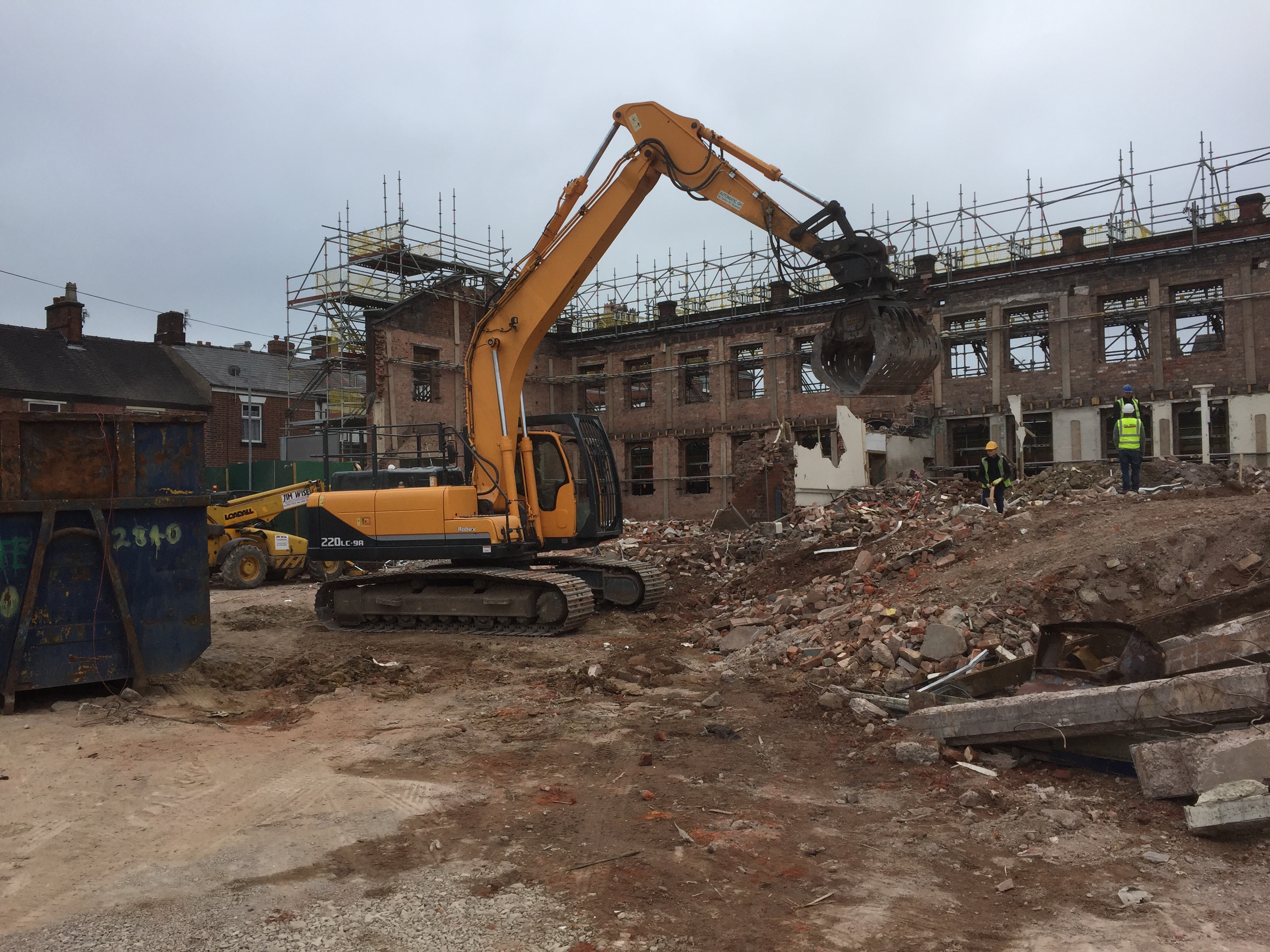
Commercial demolition is the planned, controlled removal of non-residential built structures — from retail units and office blocks to industrial facilities and mixed-use developments. Unlike residential work, commercial demolition typically involves greater complexity: larger structures, more varied materials, hazardous substance management, and stricter regulatory oversight.
Types of Commercial Demolition
- Full structural demolition — complete removal of a building to ground level, including substructure
- Partial demolition — removal of specific floors, wings, or sections while retaining the main structure
- Soft strip out — removal of all non-structural internal elements prior to refurbishment or full demolition
- Façade retention — removal of all internal structure while preserving the external face, typically for heritage or planning reasons
The Commercial Demolition Process: Phase by Phase
1. Pre-demolition survey — a Refurbishment and Demolition (R&D) survey is legally required before any intrusive works begin. This identifies hazardous materials (ACMs, lead paint, contaminated land) and informs the RAMS and waste management plan.
2. Enabling works — utility disconnections, temporary propping, hoarding, and traffic management.
3. Soft strip — systematic removal of interior fit-out and services. Properly executed soft strip significantly reduces the tonnage of mixed waste and maximises material recovery. See our comprehensive guide to soft strip out.
4. Principal demolition — mechanical demolition, top-down progressive demolition, or a combination depending on structure, programme, and proximity to neighbouring buildings.
5. Site clearance and remediation — removal of all arisings, crushing of concrete for reuse where viable, and preparation of the site for handover.
| Get a Free Quote → | 0800 222 9772 |
Regulatory Framework
Commercial demolition in the UK is governed by: the Construction (Design and Management) Regulations 2015 (CDM 2015); the Control of Asbestos Regulations 2012; the Environmental Protection Act 1990; and the Health and Safety at Work Act 1974. A compliant contractor will have documented processes for each.
What Drives Commercial Demolition Costs?
- Structural complexity and method required
- Volume and type of hazardous materials (particularly ACMs)
- Access constraints — inner-city sites, occupied adjacent properties
- Programme requirements — night or weekend shifts attract premiums
- Waste volumes and disposal requirements
Jim Wise Demolition's Commercial Capabilities
With over 40 years' experience and 2,489+ completed projects, Jim Wise Demolition is one of England's most established commercial demolition contractors. Recent commercial projects include the demolition of former retail units, office blocks, and mixed-use developments across the Midlands, North West, and beyond. View our project gallery for examples.
.svg)