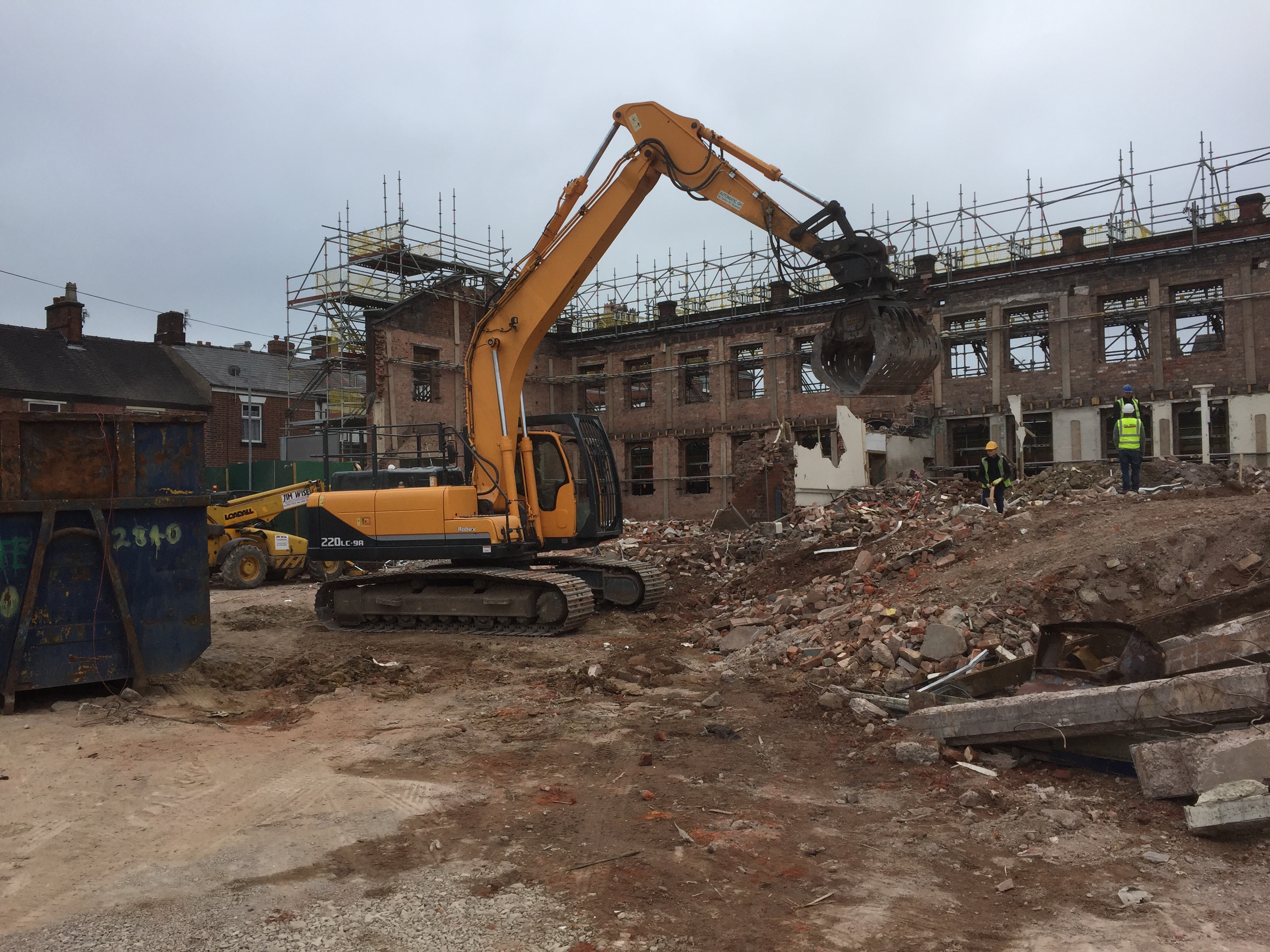
Liverpool is one of the great warehouse cities of the world. The docks that made it rich left behind mile after mile of brick warehouses, hydraulic towers, granaries and works — some magnificently converted, some protected, and some standing derelict on land the city badly needs back. For demolition contractors in Liverpool, that inheritance defines the work: this is a city where heritage judgement, structural caution and neighbourly working all matter on the same site, often on the same day.
We cover the whole of Merseyside — Liverpool, Bootle, Kirkby, the Wirral, St Helens, Widnes and Runcorn — and this guide sets out what makes demolition here different, and what a well-run Liverpool project looks like in 2026.
Why 2026 Matters for Liverpool's Building Stock
The city's demolition market in 2026 is being pulled by two forces at once. Regeneration momentum along the northern docks and city fringe keeps bringing forward large, complicated clearance plots — land where a century of port industry left both magnificent buildings and genuinely unsalvageable ones. At the same time, the condition clock is ticking on derelict stock: every winter of water ingress moves more warehouses from "convertible" to "dangerous", and emergency interventions on failing structures have become a steady part of Merseyside work. The city's heightened sensitivity around heritage — sharpened by years of hard debate about what Liverpool keeps and what it loses — means every demolition decision now happens in public, with evidence expected.
For clients, the practical upshot is simple: early structural appraisal and honest condition evidence have never been more valuable, because they're what separates a consented, defensible project from a stalled one. The rest of this guide covers what delivery looks like once that decision is properly made.
Dockland Warehouses: Beautiful, Massive and Unforgiving
Victorian dock warehouses were built to carry extraordinary floor loads, and everything about them is oversized: walls several bricks thick, dense grids of cast-iron columns, timber floors of enormous section, and foundations bearing onto whatever the dock engineers could find. When one of these buildings has to come down — fire-damaged, structurally failed, or simply beyond viable reuse — the method is dictated by the structure itself.
Cast iron is the material that demands the most respect. It's strong in compression and brittle in everything else; a column that has carried its load for 150 years can fail suddenly when the structure around it is disturbed. That's why warehouse demolition is sequenced with real care — floors out in a planned order, the frame progressively relieved rather than shocked, top-down reduction under BS 6187:2011 with exclusion zones sized for a worst-case collapse, not a best-case one.
And these buildings are rarely empty of hazards. A century of cargo, machinery and refits leaves oils, lead paint and asbestos throughout — the demolition and refurbishment survey under CAR 2012 comes first, always, and our HSE licensed in-house team deals with what it finds. Our guide to asbestos and hazardous material removal explains the process.
Working in a Heritage City
Liverpool takes its built heritage seriously — as it should. Listed buildings, conservation areas and locally cherished structures are everywhere across the city centre and the dock estate, and demolition proposals here rightly face scrutiny. Our position is straightforward: not every old building can or should be saved, but that judgement needs making early, honestly and with the right people in the room — before machines are priced, not after they're on site.
Where a building or facade has genuine significance, methods change: facade retention, hand demolition to protect neighbouring fabric, salvage of materials for reuse. We've delivered sensitive work of exactly this kind, including specialist demolition at the Grade II* listed Wedgwood Institute in our home town. The thinking behind those decisions is in our piece on balancing demolition and conservation.
Party Walls and Tight Terraces
Away from the docks, a large share of Liverpool demolition happens in terraced streets — removing fire-damaged or failed properties from otherwise sound rows. This is precision work: the party walls stay, the neighbours stay, and the structure comes out from between them by hand and small plant, top-down, with temporary works designed before a single brick moves. Weather protection and making good to the exposed party walls are part of the job, not an extra. It's slow, careful, and completely unlike volume clearance — and it's a discipline we apply on every attached-structure project we deliver, most recently the Eccles church demolition where a retained building shared the gable.
| Get a Free Quote → | 0800 222 9772 |
Clearance for a City That's Regenerating
From the northern docks through to the city fringe, Liverpool has major regeneration ambitions, and demolition is the enabling act for most of them. Former industrial land across Merseyside brings the usual challenges — made ground, tanks and interceptors, contamination that must not be spread — and our site clearance approach is built around documentation as much as machinery: every load weighed, ticketed and traceable to a licensed facility, with around 96% of arisings diverted from landfill across our projects. Dock-era brick and stone deserve better than crushing where they can be reclaimed, and we keep reclaimable material separate from the start.
A Liverpool Warehouse Project, Step by Step
- Structural appraisal — cast iron, floor condition and any fire damage assessed first; the frame dictates everything that follows.
- Intrusive asbestos survey — under CAR 2012, reaching the voids and layers a century of refits created.
- Consents and notifications — Section 80 notice, conservation-area or listed-setting consents where they apply, HSE notice for licensed works.
- Salvage plan — reclaimable brick, stone and timber identified before demolition, not after.
- Asbestos removal and soft strip — in-house licensed teams, then floors out in engineered sequence.
- Structural reduction — top-down to BS 6187:2011, exclusion zones sized for cast iron's brittleness, hand work at retained interfaces.
- Clearance and documentation — dockland ground handled with care, every load ticketed, full pack at handover.
The whole sequence runs under CDM 2015 with resident supervision — and on Merseyside's heritage-adjacent sites, the salvage plan in step four is often what separates a respected contractor from a merely fast one. Materials with 150 years of history deserve the choice of a second life, and giving them that choice costs nothing but forethought.
What Drives Cost and Programme on Merseyside
Liverpool pricing turns on four things. Structure: dock-era buildings are massive, and mass takes time — though the brick and stone they yield has reclaim value that partially flows back. Asbestos scope, only truly known after the intrusive survey, and often substantial in buildings refitted across a century. Setting: heritage-adjacent and party-wall work is slower, more skilled and more supervised than open clearance — hand demolition costs multiples of machine work per cubic metre, and is worth every penny where it's needed. And ground: dockland made ground and former industrial plots need clearance that documents everything and disturbs nothing it shouldn't.
Programmes follow the same shape everywhere we work: survey and notifications (with the HSE's fourteen-day notice where licensed asbestos applies), removal, strip, structure, clearance. Terrace infills run weeks; major warehouse or clearance projects run months. The single biggest programme protection is having one contractor own the whole chain — which is how we deliver.
Liverpool Demolition: Quick Answers
Can you demolish part of a terrace without damaging the neighbours?
Yes — it's precision work: hand and small-plant demolition top-down between retained party walls, temporary works designed first, weather protection and making good included. It's slower than clearance and priced accordingly.
What happens if the building is in a conservation area?
Extra consents apply and methods change — we flag this at survey stage and won't start without the paperwork in place. Heritage settings are about judgement as much as machinery.
Is reclaimed brick from warehouses actually reused?
Where condition allows, absolutely — dock-era brick has real value and we keep it out of the crusher from day one, palletised for reuse rather than buried in hardcore.
How far across Merseyside do you work?
The whole region — Bootle, Kirkby, the Wirral, St Helens, Widnes, Runcorn and Southport, with Cheshire covered by the same teams.
Appointing the Right Contractor on Merseyside
Whether the job is a warehouse, a terrace infill or a full site clearance, the tests for a Liverpool contractor are the ones we'd apply to ourselves: current HSE asbestos licence, verifiable ConstructionLine and SSIP accreditation, comparable projects you can check, a proper intrusive survey before the price, and the insurance to work beside occupied and listed buildings. The full checklist is in our complete UK guide to choosing a demolition contractor.
We bring the same team, plant and standards to Merseyside that we bring everywhere: ConstructionLine Gold, SSIP Acclaim, NEBOSH and IOSH qualified management, zero prohibition notices in over a decade. Family-run since 1982 — plan it properly, do it safely, leave the site clean.
Planning demolition in Liverpool or anywhere on Merseyside? Start at our Liverpool demolition contractors page, arrange a free site visit, or call 0800 222 9772.
.svg)