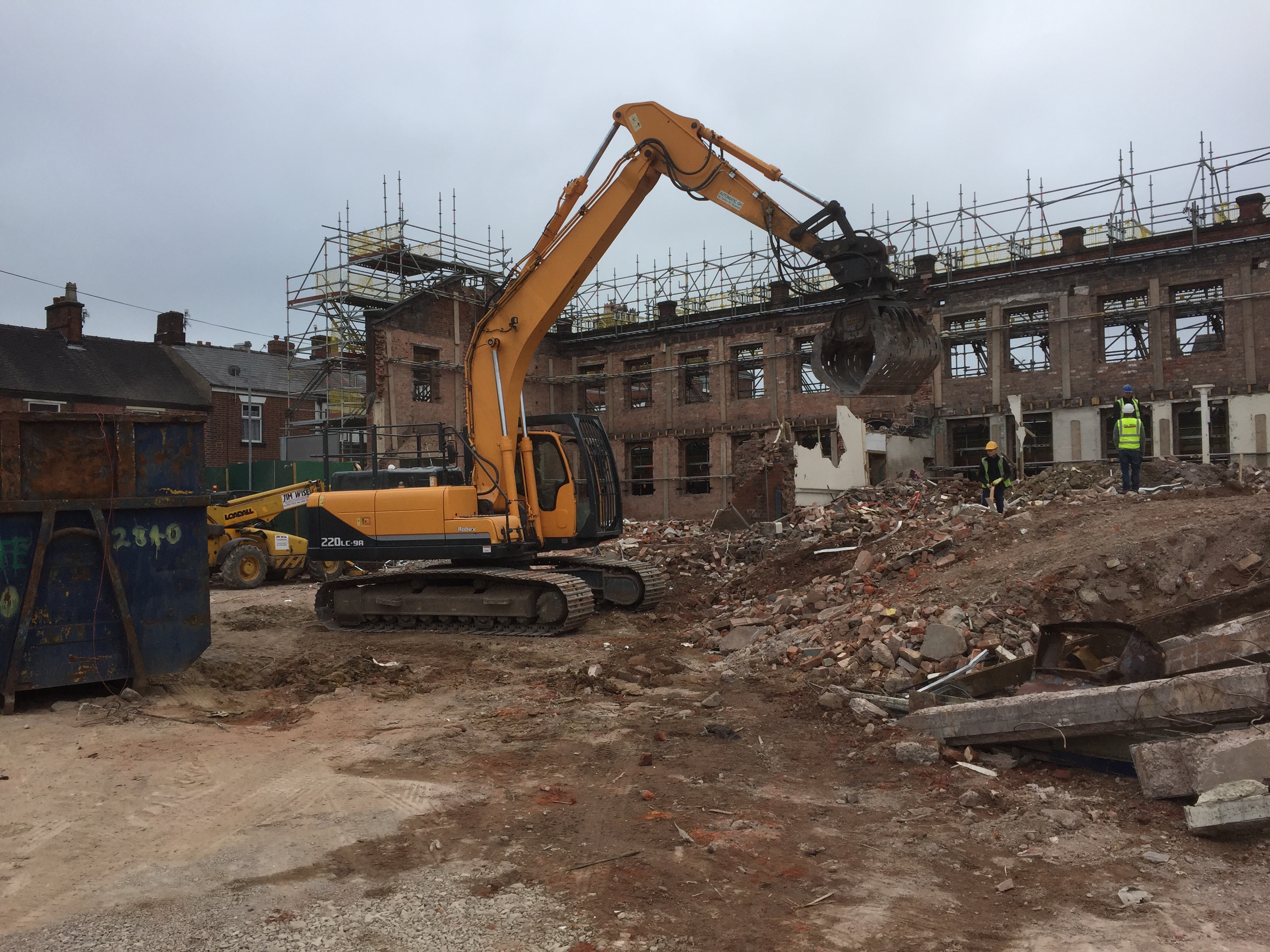
Bristol is one of the busiest development cities in the country, and the wider South West — Bath, Gloucester, Cheltenham, Swindon, down to Taunton and Exeter, across to Newport and Cardiff — moves with it. For a region this active, the demolition market has a particular shape: harbourside and Victorian stock in the city, big regeneration plots around the station quarter, post-war commercial buildings reaching end of life, and a long M4/M5 corridor of industrial and logistics sites in constant churn. Here's how demolition in Bristol and the South West actually gets delivered — including by contractors, like us, who mobilise into the region rather than sitting inside it.
Why the South West Market Is Worth Understanding in 2026
Bristol's development economy has stayed genuinely busy — station-quarter regeneration, harbourside evolution and a steady flow of office-to-other conversions — and the wider corridor moves with it: logistics churn along the M4 and M5, town-centre repositioning in Bath, Gloucester and Swindon, and industrial renewal around the estuary. For demolition, that translates into consistent demand across every project type this guide covers, from delicate strip outs to full clearances.
The market has a structural quirk worth naming: demand regularly outruns local supply for specialist packages — licensed asbestos plus demolition as one programme, heavy structural work, heritage-adjacent methods — which is why national contractors delivering into the region is normal practice here, not an exception. That makes the appointment question less about postcode and more about evidence: survey quality, licence, references and away-working arrangements. This guide is built around exactly those questions, including the honest economics of mobilisation.
Bristol's Stock: Harbourside, Victorian and Post-War in One City
Bristol's demolition work spans three distinct building generations. The harbourside and its hinterland carry warehouses and industrial buildings from the port's great era — heavy brick and stone structures, some superbly converted, some beyond viable reuse. The Victorian and Edwardian commercial city contributes offices, works and institutional buildings with the classic hazards of their age. And the post-war layer — concrete-framed offices and infrastructure from the rebuild decades — is now the biggest single source of end-of-life demolition, just as it is in every British city.
Each generation gets its own method, but the constants don't change: a demolition and refurbishment survey under CAR 2012 before anything else, licensed asbestos removal by HSE licensed teams — Bristol's pre-2000 stock carries the full range, from sprayed coatings to cement roofs — then soft strip, then structural reduction top-down under BS 6187:2011 within a CDM 2015 demolition phase plan. Our plain-English guide to what commercial demolition involves walks through the sequence for anyone commissioning their first project.
Working in a City That Never Stops
Bristol sites are rarely generous. Regeneration plots sit tight against live rail infrastructure, busy roads and occupied buildings; harbourside work happens beside water, visitors and homes; and the city's hills make logistics interesting in ways flat cities never discover. The disciplines that make these jobs uneventful are the ones we apply everywhere: exclusion zones sized honestly, timed deliveries and banksman control on every movement, dust suppression at source reviewed daily, noise and vibration monitored against agreed levels, and a highway swept clean at the end of every shift. The planning behind all that is covered in strategic demolition planning.
The Distance Question — Answered Honestly
We're a Midlands-based contractor, and clients in the South West sometimes ask the fair question: does distance matter? The honest answer is that demolition has always been a mobilising trade. Plant travels on low-loaders wherever the work is; our teams work away as standard; welfare and secure compounds are established on site; and supervision is resident, not visiting. We've delivered projects the length of the country — from structural strip out at West Quay in Southampton to works in Newcastle upon Tyne and Kent — and the M5 corridor is easier ground than most of it.
What actually matters is unchanged by geography: the quality of the survey, the honesty of the programme, the licence held by whoever touches the asbestos, and the standards on site every day. Distance is a logistics line in the plan, not a risk to the project.
| Get a Free Quote → | 0800 222 9772 |
The M4/M5 Corridor: Industrial and Logistics Churn
Beyond the city, the South West's employment corridors generate steady demolition and strip out work — older industrial units cleared for modern logistics, retail and roadside stock repositioned, and former works sites along the estuary reclaimed for new uses. This is bread-and-butter industrial demolition: portal frames down in sections, cladding and cement roofing handled correctly, slabs up and crushed. Where volumes justify it, our on-site concrete crushing turns the slab into the next scheme's sub-base without a single wagon movement — part of why around 96% of our demolition waste is diverted from landfill across projects, every load documented to a licensed facility.
A South West Project, Step by Step — Including the Mobilisation
- Site visit and constraints — we travel for surveys as readily as for works; access, neighbours and setting mapped on day one.
- Intrusive surveys — asbestos under CAR 2012 and structural appraisal, fixing scope before price.
- Consents and notifications — Section 80 notice, setting-related consents, HSE notice for licensed removal.
- Mobilisation — plant moved by low-loader, secure compound and welfare established, resident supervision in place before works start.
- Asbestos and strip — in-house licensed removal, then strip out with source segregation.
- Structure — top-down reduction to BS 6187:2011, methods tuned to harbourside, rail-adjacent or corridor settings as required.
- Clearance and handover — crushing on site where volumes justify, every load documented, demobilisation as tidy as arrival.
A CDM 2015 phase plan and daily briefings govern the whole run, exactly as they do an hour from our yard. Away working changes the logistics lines in the plan and nothing else — the standards, the supervision and the accountability travel with the team. That's the honest answer to the distance question, and our project record from Southampton to Newcastle is the evidence behind it.
What Drives Cost and Programme in the South West
Bristol-area pricing turns on the same honest factors as anywhere, weighted by the region's stock. Asbestos scope in pre-2000 buildings — fixed by the intrusive survey, with the fourteen-day HSE notice programmed for licensed work. Setting and logistics — constrained city plots, rail-adjacent working and harbourside access all shape method and cost. Structure — Victorian mass, post-war concrete volumes (softened by on-site crushing) and steel credits on industrial stock. For out-of-region delivery, mobilisation is a visible line in our price rather than a hidden risk: plant movement, welfare and away-working are costed plainly, and on anything beyond a small job they're a minor share of the total.
Programmes run the universal sequence — survey, notifications, asbestos, strip, structure, clearance. City strip outs run weeks; major clearances months. Resident supervision and one contractor owning the chain end to end are what keep away-projects on programme, and it's how every one of ours is run.
Bristol & South West: Quick Answers
Does using a Midlands contractor slow anything down?
No — mobilisation is planned like any other logistics task, teams work away as standard with resident supervision, and the M5 makes the region straightforward ground. Judge any contractor on survey quality, licence and references, not postcode.
Who handles emergency call-outs on an away project?
We do — 24/7 response arrangements are set up at project start, with site security, out-of-hours contacts and escalation agreed before the first machine arrives.
What consents do Bristol projects need?
A Section 80 demolition notice to the council before works, plus planning or prior approval depending on building and setting — conservation areas and harbourside settings carry extra requirements we flag at survey.
How far across the South West do you work?
Bristol, Bath, Gloucester, Cheltenham, Swindon, Taunton, Exeter and across the bridge to Newport and Cardiff — the whole corridor, from the same teams that deliver our 125+ UK locations.
Appointing a Contractor for South West Work
Wherever your contractor is based, apply the same tests: current HSE asbestos licence and in-house removal; ConstructionLine or SSIP accreditation you can verify; comparable references — and for out-of-region firms, ask specifically how supervision, welfare and emergency response work on away projects; an intrusive survey before the price is fixed; and a full waste documentation trail at handover. Our complete UK guide to choosing a demolition contractor covers every check.
We bring ConstructionLine Gold, SSIP Acclaim, NEBOSH and IOSH qualified management, our own plant fleet and directly employed teams to every South West project — with zero prohibition notices in over a decade. Family-run since 1982: plan it properly, do it safely, leave the site clean.
Planning a project in Bristol, Bath or anywhere along the corridor? Start at our Bristol demolition contractors page, arrange a free site visit, or call 0800 222 9772.
.svg)